
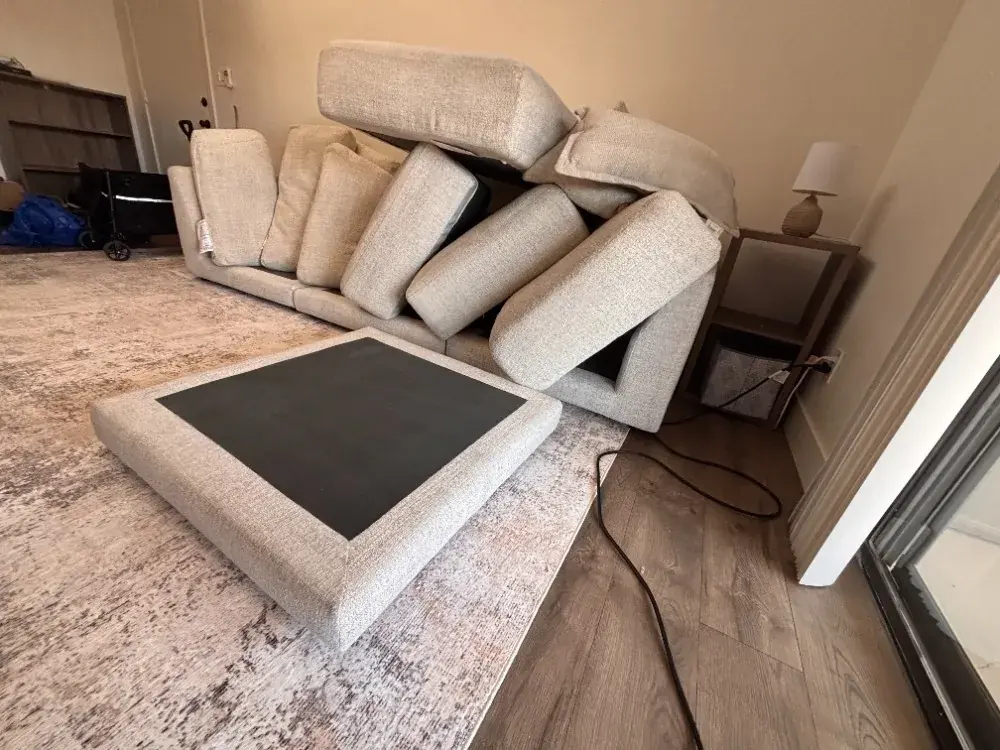
Sofas, sectionals, chairs, and other upholstered pieces are used every day, which means they collect dust, dirt, pet hair, allergens, body oils, and everyday spills over time. Regular vacuuming maintains the surface, but many contaminants become trapped deep within the fibers where normal cleaning cannot reach.
Why Upholstery Gets Dirty
Every day activities introduce new dirt and debris: desert dust and airborne particles, pet hair and dander, food and drink spills, body oils from daily use, allergens trapped in fibers, and dirt transferred from clothing.
Chandler and Valley homes experience additional dust buildup because of the dry desert environment. Even with regular housekeeping, upholstery continues collecting particles that are difficult to remove without professional equipment.
Signs Your Furniture Needs Cleaning
Your sofa or chairs look dull. Dirt and oils change the appearance over time. Fabric that once looked bright begins to appear darker or flattened, particularly on arms and headrests where body oil accumulates.
Unpleasant odors. Furniture absorbs odors from pets, cooking, and everyday use, and those smells become trapped deep inside fabric and cushions. Air fresheners cover them temporarily, but cleaning targets the source.
Increased dust or allergens. Upholstery acts like a filter, collecting dust and airborne particles that build up inside the fibers.
Stains becoming more noticeable. Using the wrong cleaning products can damage upholstery or set stains harder. Different fabrics require different approaches.
It simply feels less fresh. Sometimes furniture does not look extremely dirty but is overdue.
Why Fabric Code Matters
Most upholstered furniture has a cleaning code on a tag under the cushion or on the frame. W takes water-based cleaning. S takes solvent only, and water will ring or stain it. SW takes either. X takes neither, vacuum only.
The wrong method on the wrong code causes shrinkage, browning, water rings, or dye migration, and most of that is permanent. We check the tag before anything touches the piece, and test in a hidden spot if there is no tag.
How Often
Many homeowners benefit from professional cleaning every 12 to 24 months. You may want it more often with pets, children, high-traffic furniture, allergy concerns, frequent guests, visible stains, or persistent odors.
Pricing and what each piece costs is on our upholstery cleaning page.