
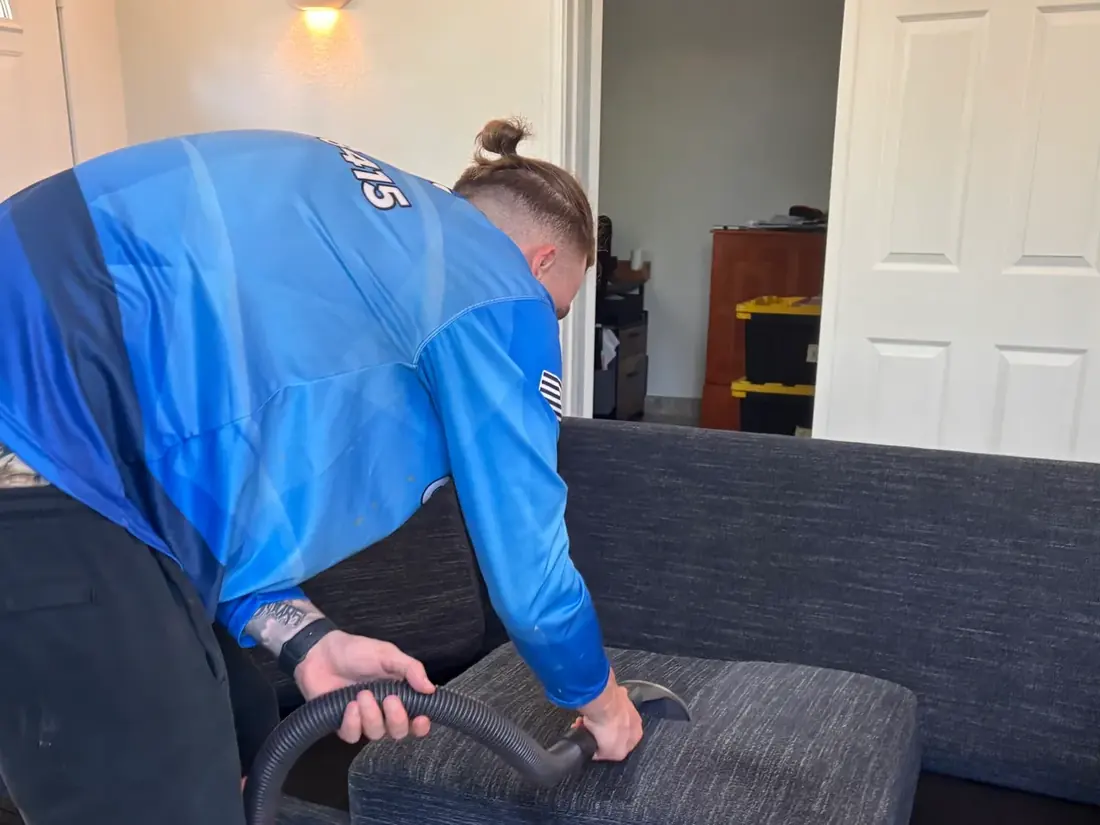
Furniture takes more daily abuse than almost anything else in a home. Kids, pets, spills, and just sitting down after a long day all leave their mark on fabric fibers. Vacuuming handles the surface, but the deeper buildup needs something more.
The Process Adapts to the Fabric
Upholstery is not one material. A leather recliner, a linen sectional, and a microfiber dining chair all respond differently to cleaning solutions and methods.
Most pieces have a cleaning code on a tag under the cushion. W takes water-based cleaning. S takes solvent only, and water will ring or stain it. SW takes either. X takes neither, vacuum only. Using the wrong method causes shrinkage, browning, water rings, or dye migration, and most of that is permanent.
So we check the code first, test in a hidden spot if there is no tag, pre-treat, then clean with either low-moisture or hot water extraction depending on what the fabric can take. Controlled moisture either way, because oversaturating upholstery is how you end up with a cushion that takes three days to dry.
Every Upholstered Surface in the Home
Sofas and couches, sectionals, loveseats, chairs and recliners, dining chairs, ottomans, and throw pillows. Fabric or leather, indoor or patio. Plus optional pet stain and odor treatment, deodorizer, and fabric protection.
That means the whole house gets handled in one appointment rather than piecing together specialists for different rooms.
Leather Needs Conditioning, Not Just Cleaning
Leather takes a pH-appropriate cleaner and conditioning afterward, because cleaning strips the oils that keep it flexible. Skipping the conditioning step is why leather cracks at the seams a year later. It is the step that decides whether the piece lasts.
Built Around Arizona Conditions
Desert dust, pet hair, and outdoor debris tracked in from patios and pools settle into upholstery fibers in ways vacuuming does not reach. Patio furniture is its own case, since UV exposure bakes soil into the fabric and makes it harder to release, which is why outdoor pieces run slightly higher than indoor.
Specific Expectations, Not Vague Promises
We will not tell you furniture will look brand new. What you can expect is cleaner-looking fabric, reduced odors, refreshed appearance, and removal of surface dirt and buildup, with the sharpest contrast usually on arms and headrests where body oil accumulates.
And we will tell you when a piece is not worth cleaning. If the fabric is worn through or the damage is structural, cleaning will not fix what is bothering you.
The Two Problems People Actually Call About
Pet stains and pet odors, consistently. Both get addressed directly with dedicated treatment rather than a generic "we clean everything" pitch. Fabric protection afterward helps furniture resist future spills, which matters most in homes with kids, pets, or heavily used pieces.
Since carpets and upholstery collect the same buildup, most people handle both in one visit. Pricing for every piece is on our upholstery cleaning page.