
Dryer vent cleaning removes the packed lint that builds up inside the duct line, restores airflow, and cuts the fire risk that comes with a restricted vent. When lint accumulates, your dryer runs hotter and longer to do the same job.
Pfaff Cleaning Co. provides dryer vent cleaning throughout Chandler, Gilbert, Mesa, Scottsdale, Queen Creek, Tempe, Ahwatukee, and Sun Lakes. Rotary brush equipment run through the entire duct, wall exits and roof exits both, not just the few feet you can reach from behind the dryer.
Flat pricing, and no visit minimum on dryer vent work in our nine core cities. One vent is a job we will come out for. Multiple units in a building are priced per unit, which runs lower. These are already our lowest numbers, so the 15% online discount does not apply here.
The hose is the cheap part. Setting the dryer at the correct distance so the line does not crush, keeping the run short and straight, and sealing both connections is what keeps lint from packing up in a sag. If a connection we made comes loose, we come back and fix it free.
Price it in about a minute with the instant quote tool, or call (480) 389-8415. Want the detail? Here is a full breakdown of dryer vent cleaning cost.
A lower number usually means a quick pass and a quicker exit. That's the difference between a clear line and a clog still behind the wall.
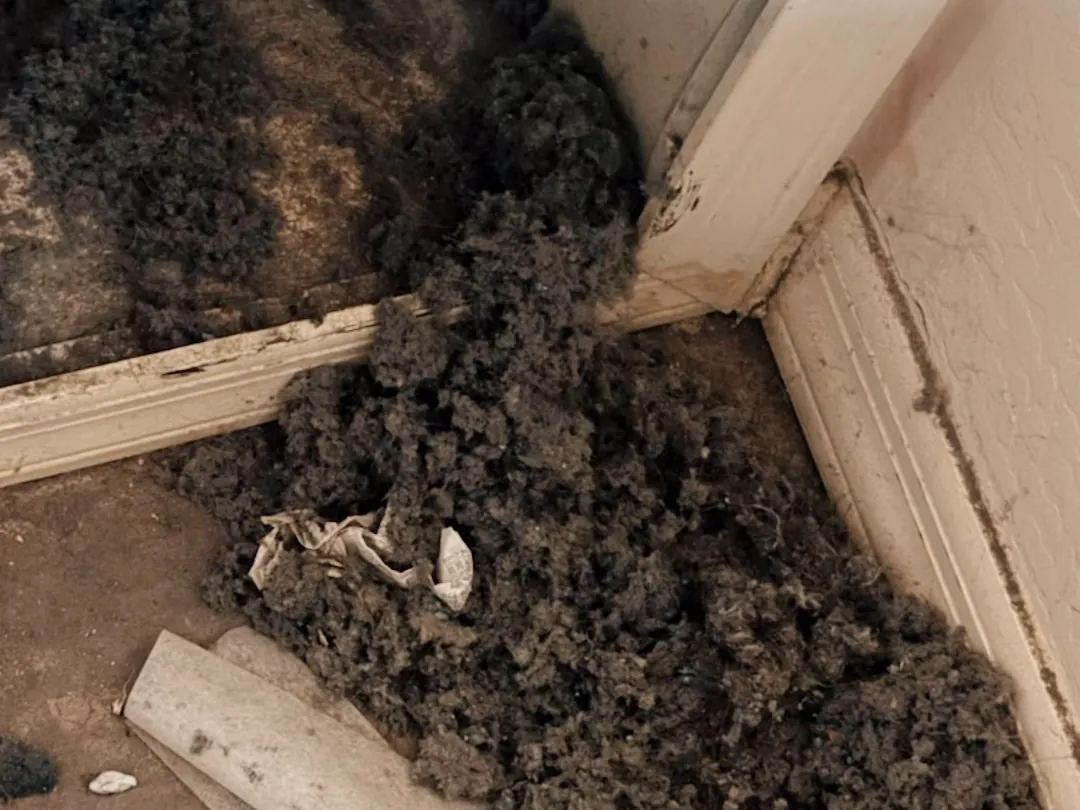
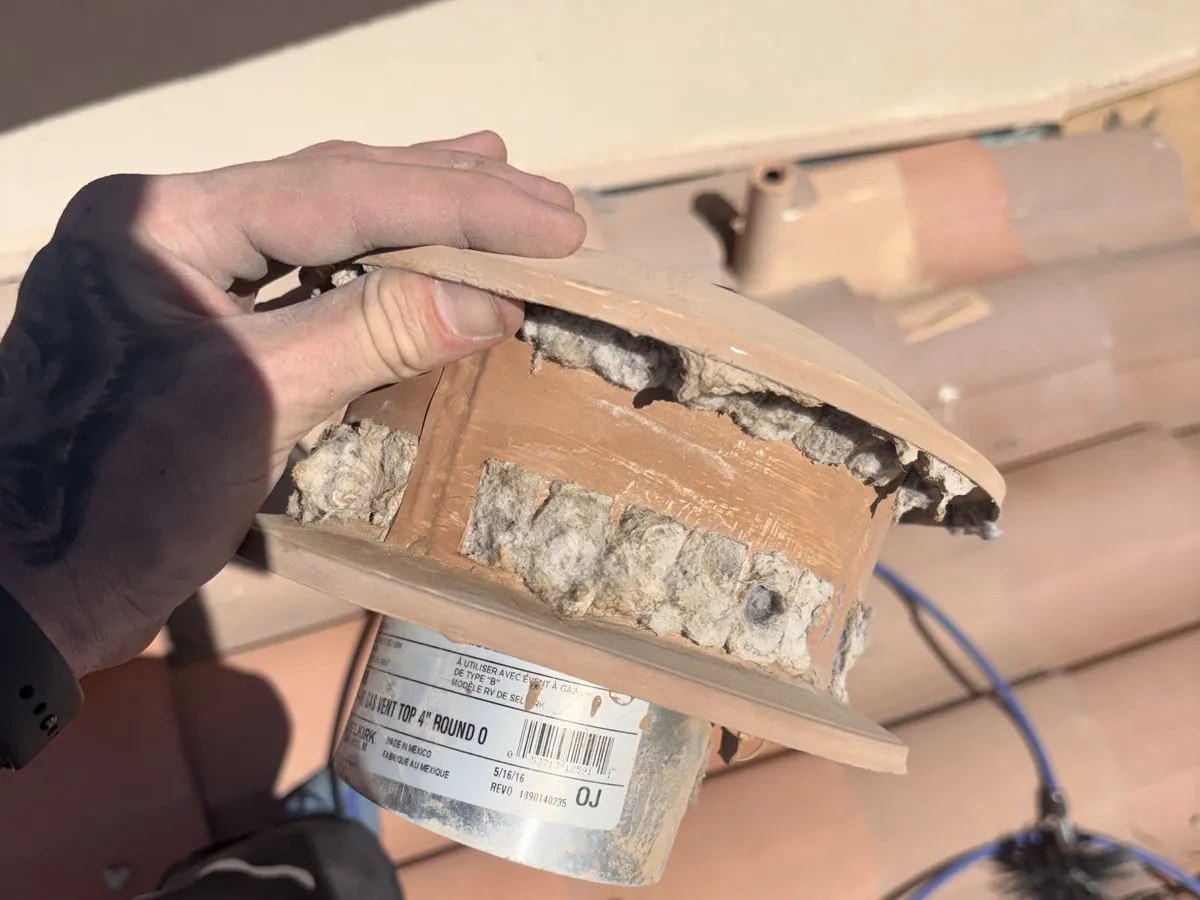
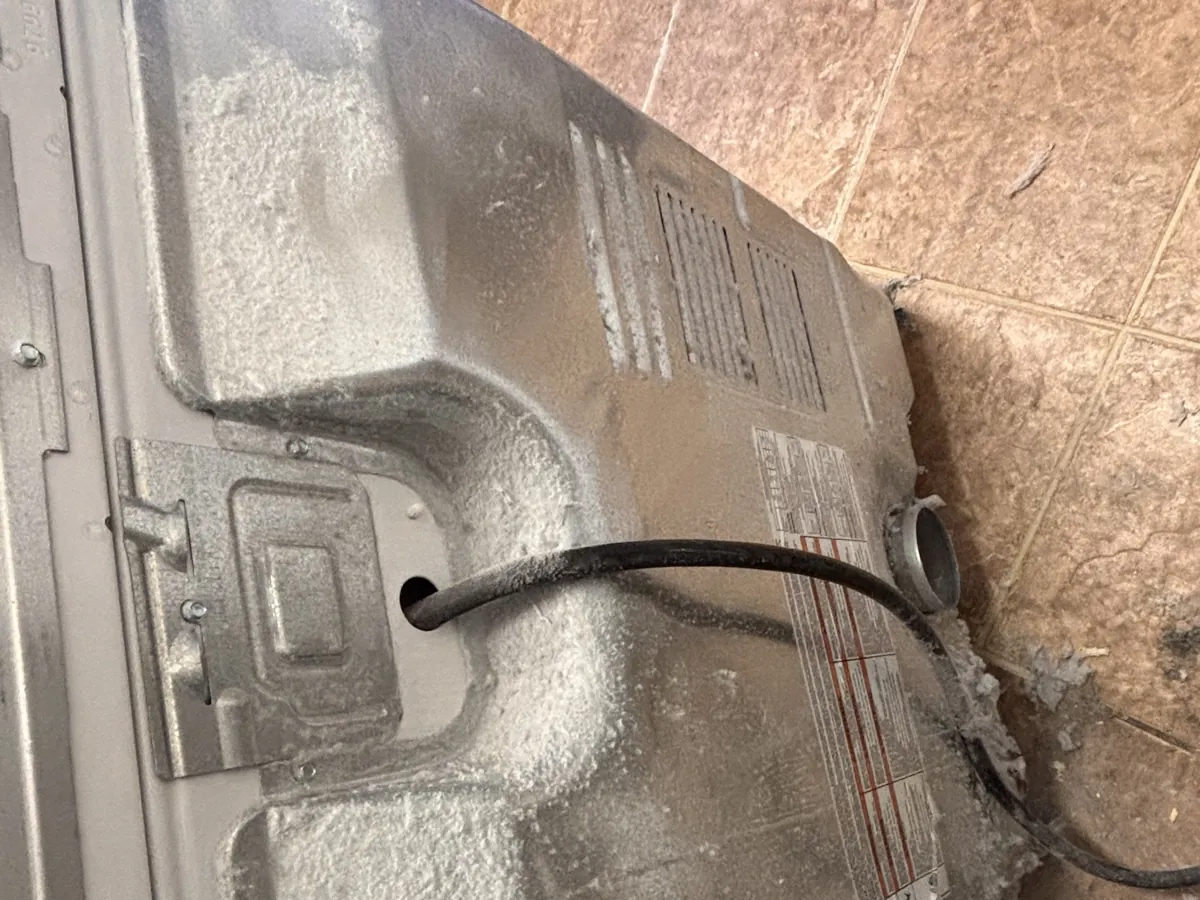
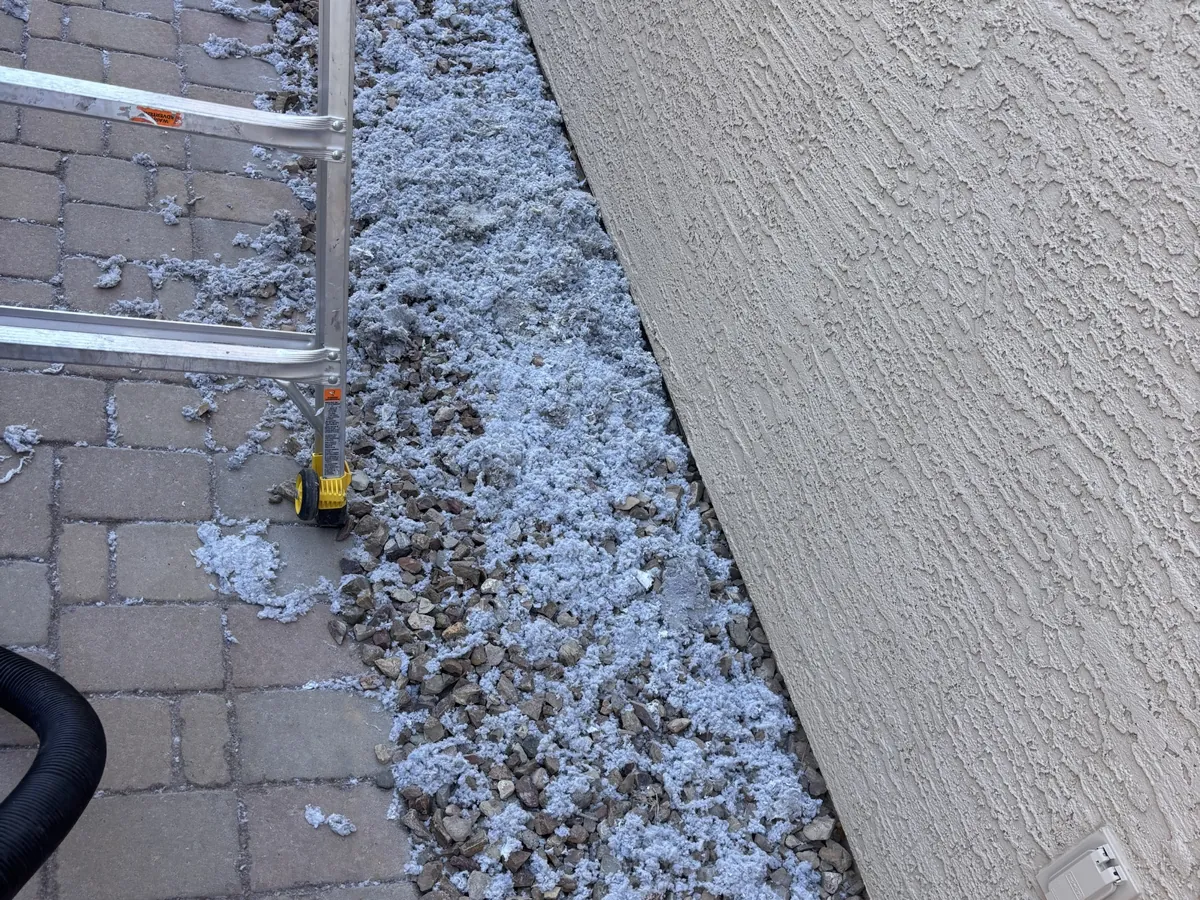

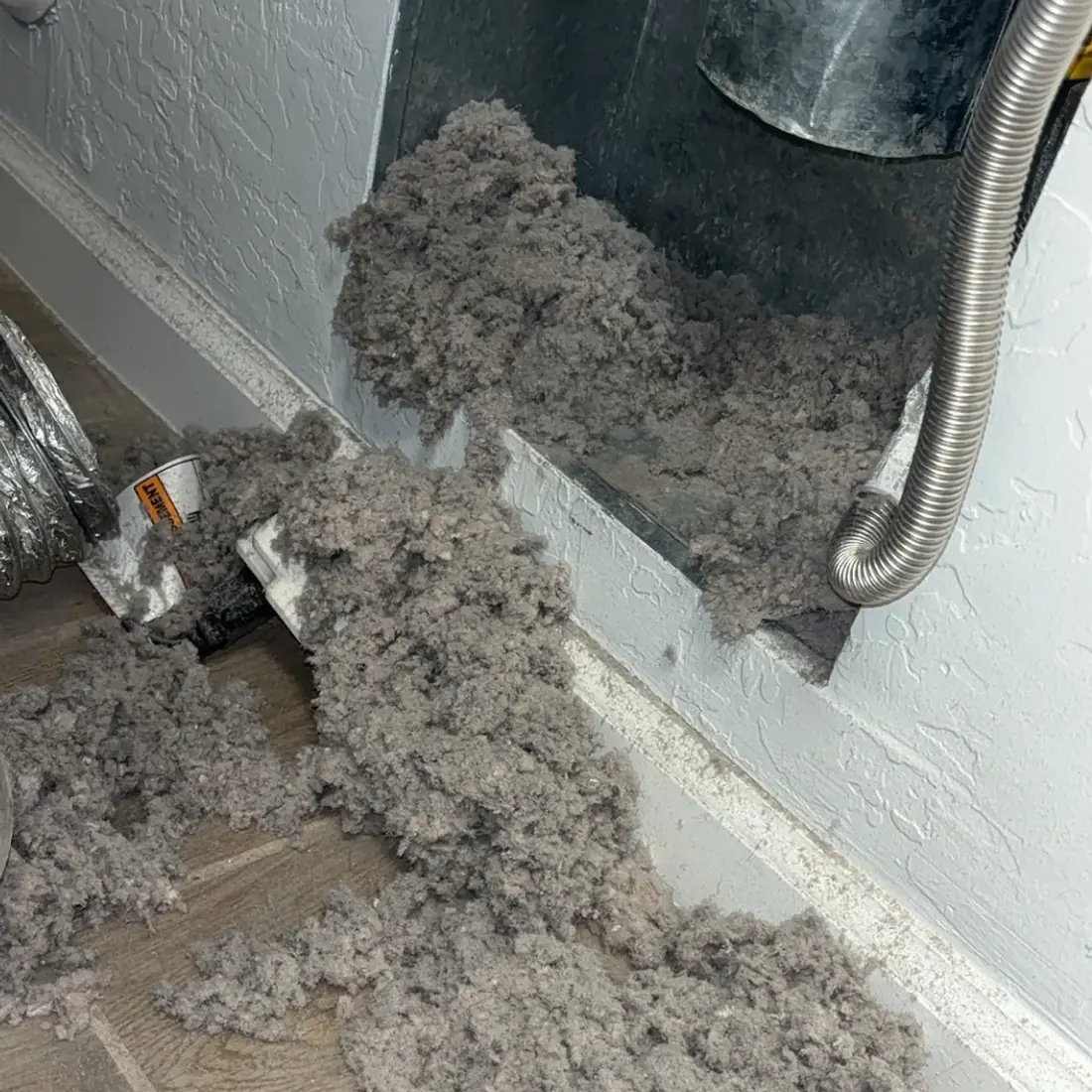
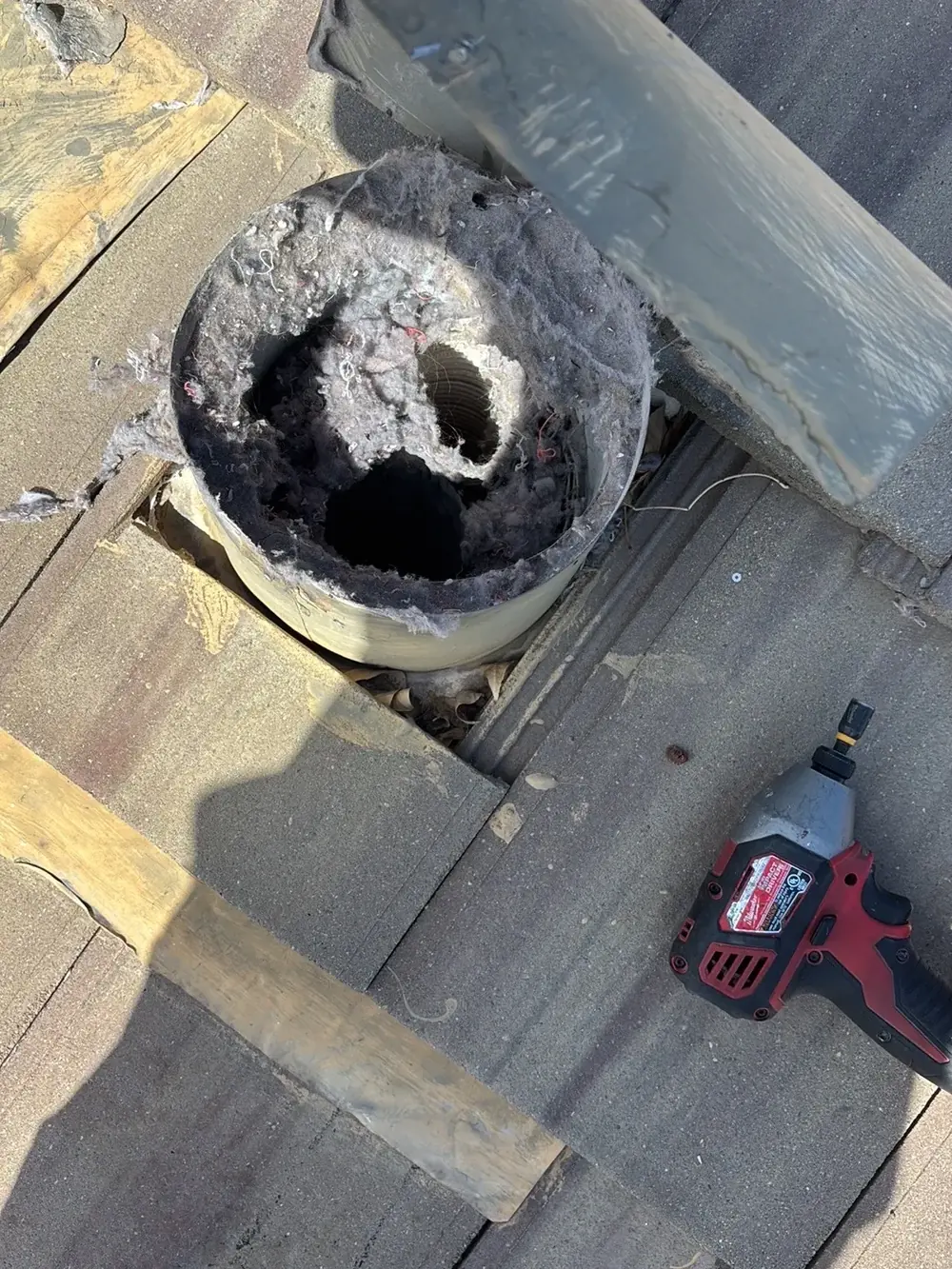
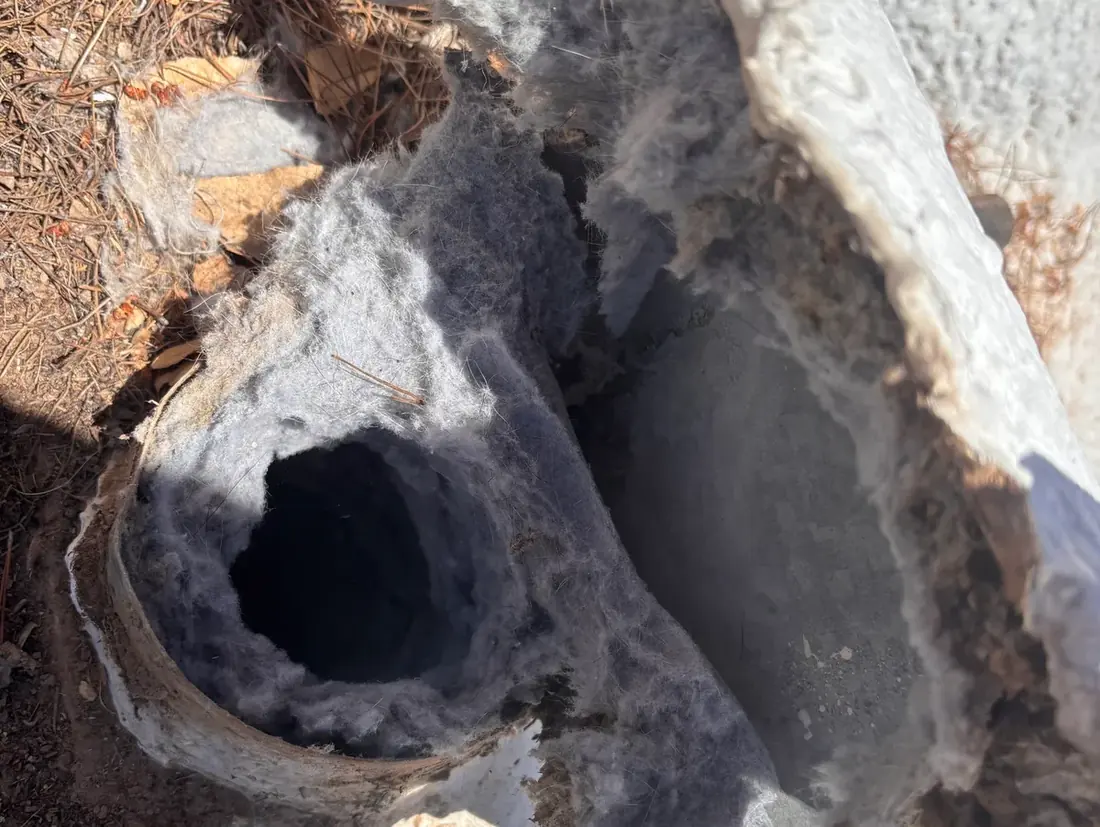
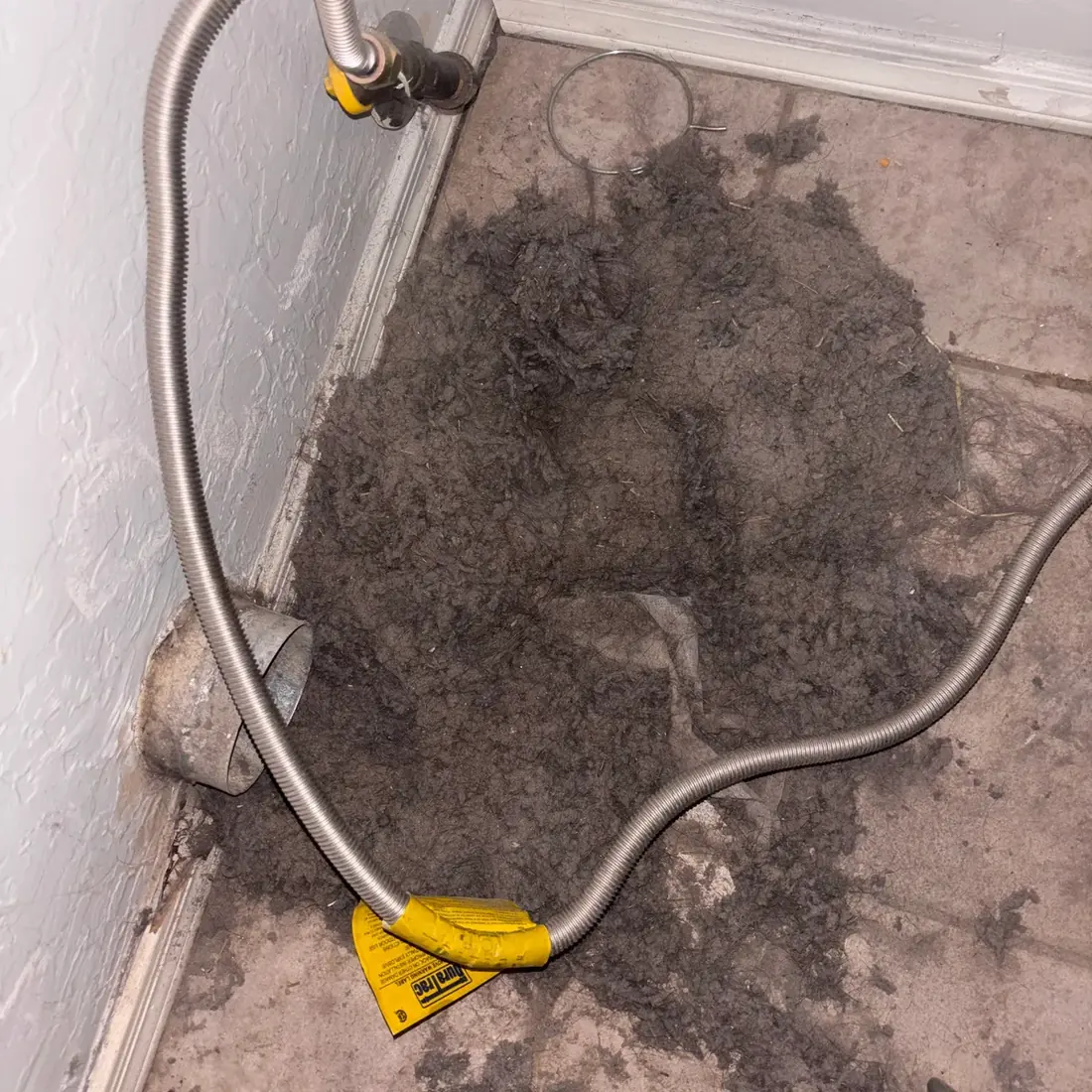
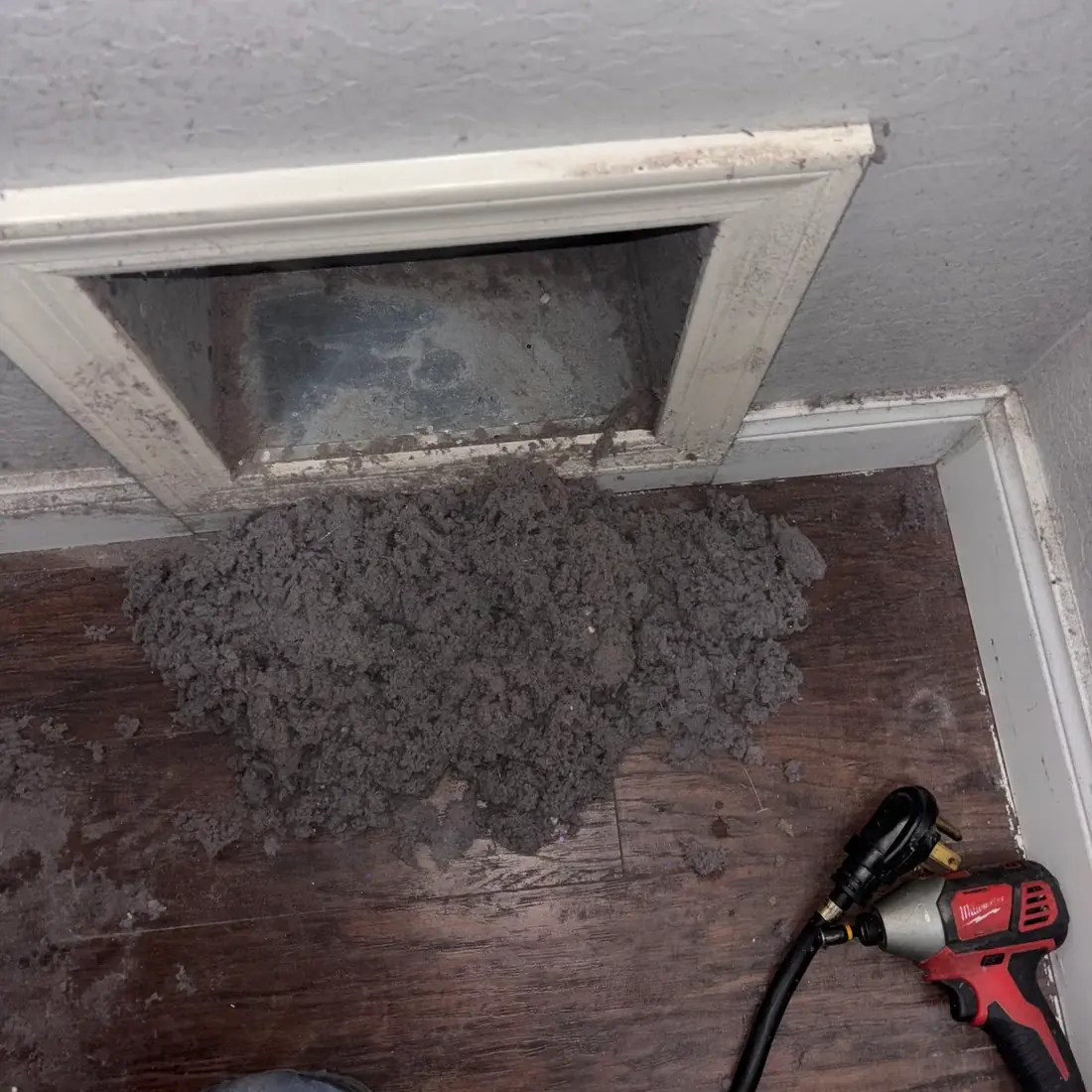
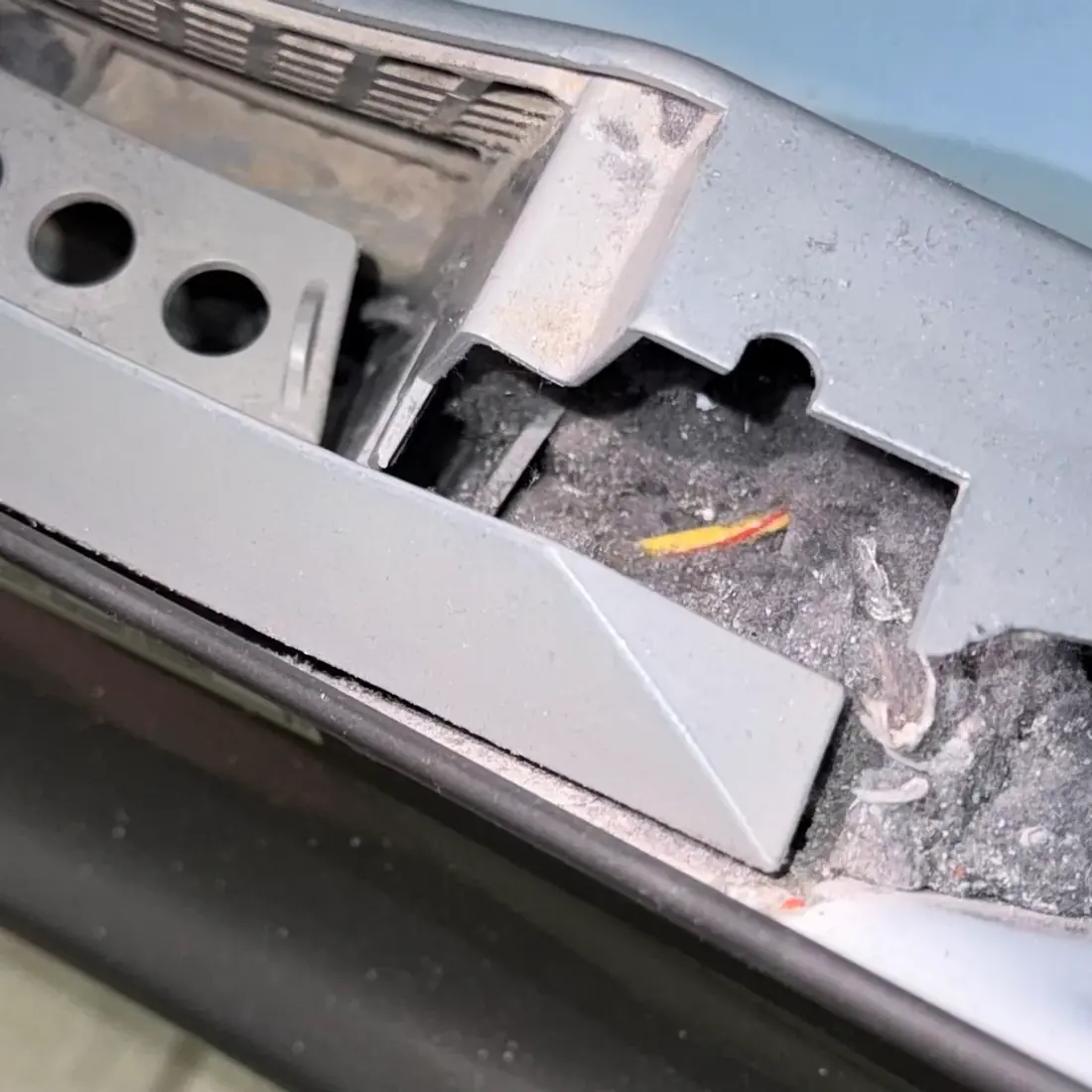
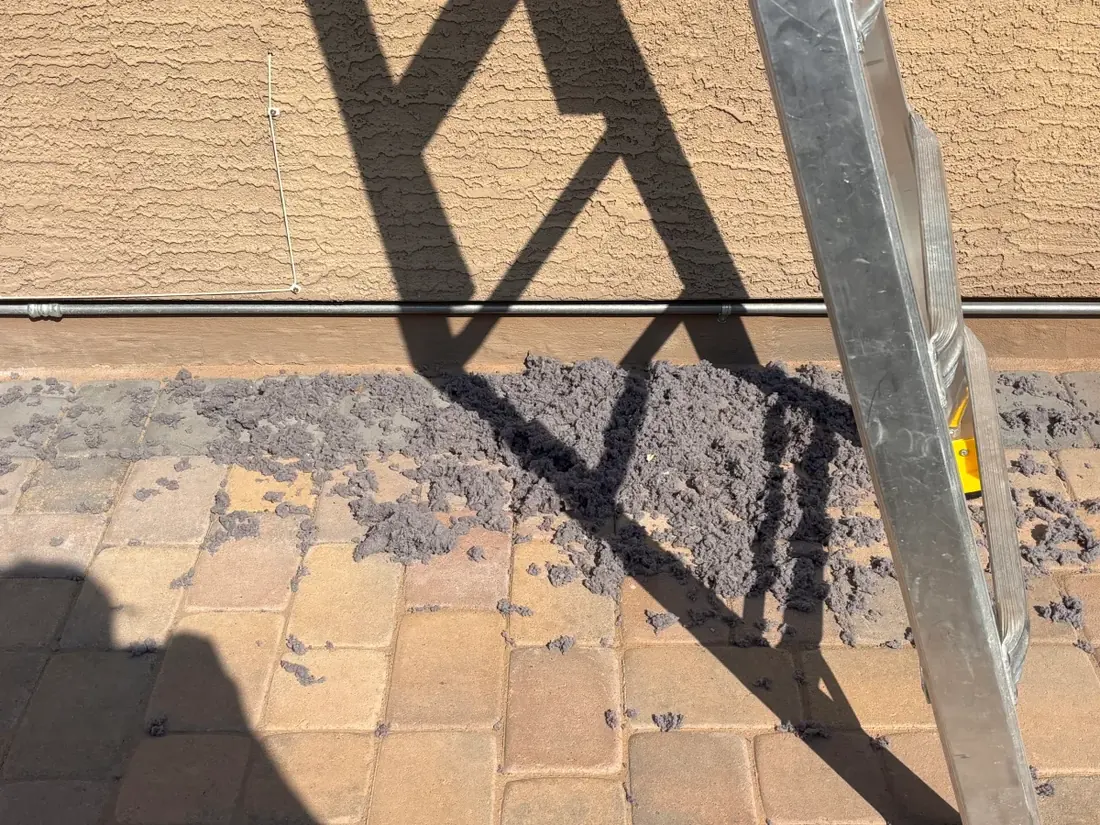
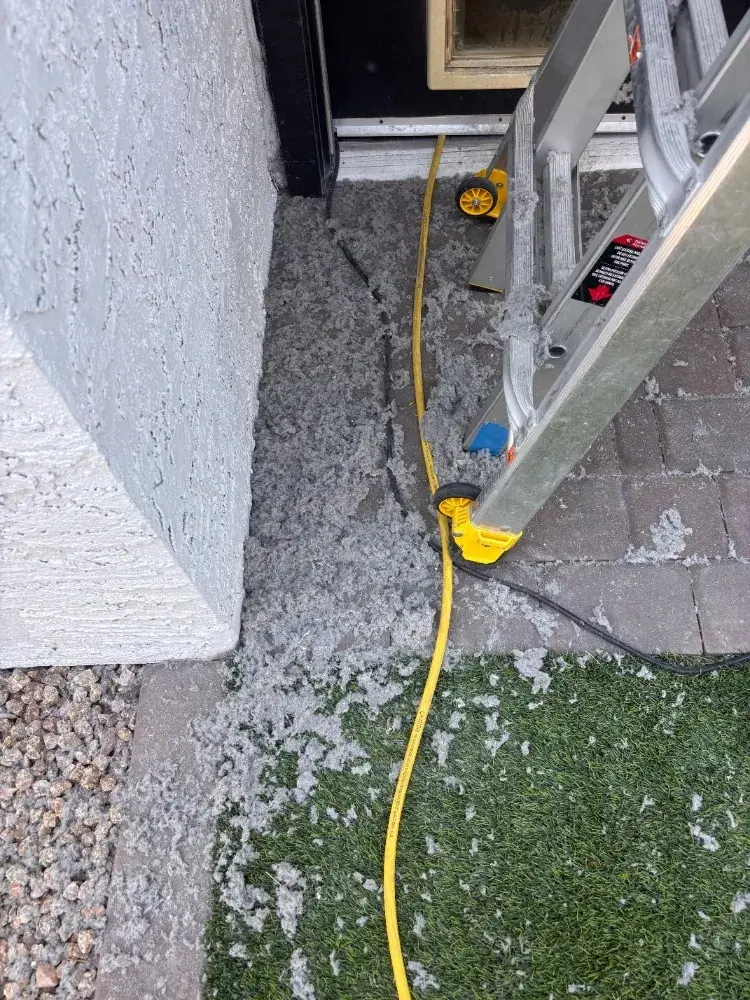
“Got an amazing amount of junk out. Now our clothes dry!”
“Pfaff cleaning co did an amazing job on my carpet! … Looks amazing! Also did my dryer vent and they got a birds nest out!!! 100% recommend!”
“Blake and Marissa were exceptionally professional and courteous and did a great job cleaning out our dryer vents! They communicated the window of their arrival and updated us to let us know when they would be coming.”
Clothes still damp after a full cycle is the number one reason people call us, and it is almost never the dryer. If your dryer takes two cycles, the laundry room gets hot, clothes come out hot but wet, or you smell something burning, the vent line is restricted. The machine is working fine and cannot push the moisture out.
Same with a dryer that shuts off mid-cycle, an exterior vent flap that never opens, or lint collecting around the machine. Those are airflow problems, and airflow is what we fix.
Modern dryers watch their own airflow, and when the vent is restricted they tell you about it. Whirlpool and Maytag machines throw F29 or a restricted airflow alert. LG shows d80, d90, or d95, which is the machine reporting how blocked the duct is. Samsung throws dC or a vent check message. GE flashes a clogged vent light, and plenty of others just stop mid-cycle or run cool.
Almost every time, that code is the vent line, not the dryer. An appliance tech charges you a service call to tell you the same thing. Before you pay for a repair, get the vent cleaned and see if the code clears, which it usually does.
Book the line and the lint trap housing, and the code is guaranteed. If an airflow code comes back within 14 days, we come back free and re-check the line. If the line is clear, that points at the machine, and we tell you that straight instead of charging you again. Even on a basic cleaning, you find out for $129 instead of a repair bill.
Every job covers the full vent line, from the dryer to the outside of the house. We look over the run first, rotary brush the entire length of the vent, remove the lint and any debris, clean the vent cover and flapper outside, and check the hose that connects your dryer to the wall for gaps or leaks. When we are done, we vacuum and clean up before we leave.
We clean the entire vent line, not just the visible lint near the dryer. That distinction matters, because the compacted lint that actually restricts airflow sits deep in the run, often at a bend or right before the vent cover outside.
A lot of cheap dryer vent cleanings are a shop vac at the opening and a receipt. That pulls the loose lint sitting near the entry and leaves the packed deposits on the duct walls exactly where they were.
The hardware store DIY kits are worse. Those flexible rods thread together with plastic couplings, and when the brush hits a bend and binds, the rods unthread and separate inside the duct. Now there is a brush head and a length of rod jammed at an elbow you cannot reach, and getting it out is a bigger job than the cleaning was.
The leaf blower trick is the other one people try. Blasting air in from the dryer end moves the loose stuff and does nothing to the packed lint bonded to the duct wall, because air alone does not scrub. What it does do is push debris further down the line toward a bend, where it compacts harder than it was before. If the exterior flapper is stuck, it has nowhere to go at all.
Our rotary brush agitation breaks apart compacted lint, scrubs the inside wall of the line, and gets what a vacuum cannot reach. It is the difference between a vent that looks cleaner at the opening and a vent that actually flows.
Clothes taking more than one cycle to dry. The dryer running hotter than normal. A burning smell during a cycle. Lint collecting around the dryer or on the floor behind it. The exterior vent flap not opening when the dryer runs. The dryer shutting off before the load is dry.
If your dryer takes two cycles to dry towels, the vent is restricted. That is the most common call we get.
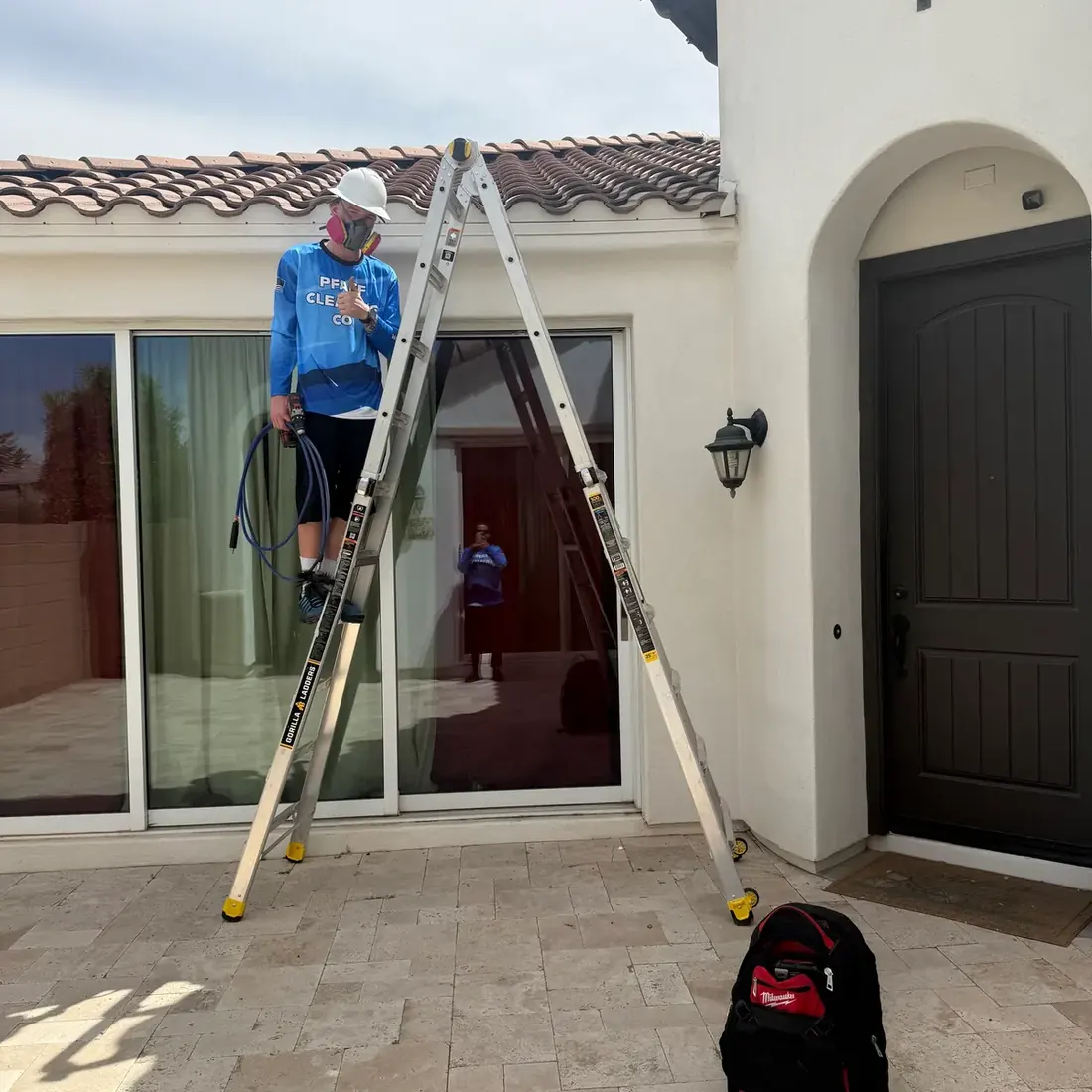
Most vents exit through a sidewall, and we clean those from both ends, inside at the dryer connection and outside at the vent cover. Roof exits we usually clean from both ends, at the dryer and up top at the roof. On a straight run where we can see daylight through the vent cover from inside, the exit is confirmed clear, so we clean it from inside without going on the roof. On tall condo and townhome buildings we clean the full run from inside instead, since those roofs are not something we will put a ladder on.
Lint gets past the screen and collects in the trap housing and connection area, where you cannot reach it. Cleaning that out restores airflow your vent cleaning alone will not recover.
Many dryers are still connected with old foil or plastic hose that restricts airflow, collapses when the dryer gets pushed back, and collects lint in its ridges. We replace it with heavy-duty semi-rigid aluminum and install it properly, which matters more than the part itself. Every hose we install gets sealed and clamped at both ends. A connection on one of our hoses that works loose gets fixed free.
Long vent runs are common in Valley homes, especially in newer builds where the laundry room sits in the middle of the floor plan. Roof exits are common too, and both add distance and bends where lint packs up.
Add year-round dust that gets pulled in through the vent cover outside, and you get buildup faster than a short straight run would ever see.
According to the National Fire Protection Association, U.S. fire departments respond to an average of roughly 14,600 home fires a year involving clothes dryers or washing machines. Failure to clean is the leading contributing factor.
Routine dryer vent cleaning removes the buildup behind most of them. It also stops your dryer from running twice as long to do one load, which shows up on the power bill in an Arizona summer.
Line and lint trap done, airflow code gone. If it comes back in 14 days, so do we.
We take our time. No job gets rushed to make room for the next one.
Since December 2024, every job Pfaff Cleaning Co. has taken on has been handled by our own team. 500+ jobs later, we’re still at a 5.0 on Google.
We are not the cheapest quote you will get, and we are not trying to be. We price the job, not the appointment. Our number is flat and it is on this page, so you know what it costs before you call.
We will also tell you straight what we found. If your vent was in decent shape, we will say so. If your hose is the actual problem and the line was fine, we will tell you that too instead of selling you the full package.
Locally owned, serving Chandler, Gilbert, Scottsdale, Mesa, Queen Creek, Tempe, Ahwatukee, Sun Lakes, and Paradise Valley.
📊 Dryer vent fires: what the data actually says, with the NFPA numbers and the code your vent is supposed to meet.
The most common thing people say when we pull the line is some version of I know, I should have done this sooner. Most homeowners do not know dryer vents need cleaning at all, and plenty of the houses we service have never had it done since they were built. That is normal, not negligent.
You are handling it now, before it became a fire or a repair bill. That is the whole point.
Clothes taking longer than one cycle, especially towels and jeans. The dryer or laundry room running hot. Burning or musty smells during a cycle. Excess lint behind the machine. The outside vent flap not opening. The dryer shutting off before clothes are dry. You have never had it cleaned, or you just bought the house.
Contact Pfaff Cleaning Co. today for a free quote.
Apartments, condos, HOAs, senior living, and laundromats are priced per unit at published rates, with a dated record for every unit. Lint trap housing cleaning and hose upgrades are $98 per unit if you want them. We service commercial dryer vents across the Phoenix metro. Price your property in the commercial calculator, or find your city:
Rates, access details, and the per-unit record are all on our commercial dryer vent cleaning page.
A lot of dryer vent hoods come with a screen or a little cage over the opening. It is there to keep birds out, and it does that. It also catches lint on every load, because lint is exactly the size to pack into mesh. Once the holes fill, the dryer is pushing against a clogged screen every cycle and the line behind it loads up faster than it ever would have.
An open flap with no cage is what you want. A simple damper that opens with the airflow and falls shut when the dryer stops. Nothing for lint to grab onto.
Birds are a real concern, but cleaning handles that better than a screen does. Every ten months or so, and again after a place has sat empty for a while, which is worth knowing if you are a snowbird or you travel. A vent that has not run in a month is exactly what a bird is looking for, and a cleaning clears the nest and the lint in the same visit.
If we pull a screen off or find a termination with a nest or a damaged hood, it goes in your record as a repair rather than getting cleaned around.
The best dryer vent termination is a simple flap that swings open when the dryer runs and falls shut when it stops. No screen, no mesh, no cage over it.
Screens get installed to keep birds out, and they do work for that. The problem is that lint catches on the mesh from the inside, packs into the holes, and chokes the airflow down to almost nothing. A screened cap is the most common reason we find a vent that was cleaned recently and is already restricted again.
Cleaning on a schedule handles the bird problem too. Birds nest in a vent that has been sitting unused, which is why it happens to snowbirds and anyone who has been away for a week or more. A line that gets used and gets cleaned is not where a bird builds. If your place sat empty for a season, have the vent checked before you run the dryer, not after.
If we find a nest, a damaged cap, or a screen packed with lint, it goes on your record as a repair instead of getting cleaned around.
If you can get ten or more homes on your street, in your HOA, or in your community booked for the same day, the whole group moves to our commercial per-unit pricing, which runs well under the single-home rate.
We have done a number of these already, whole streets and HOA sections in one day. It works because the drive time and setup get spread across the block instead of eaten by one house. Same equipment, same work, same record for every home. You just have to get your neighbors to say yes.
Text (480) 389-8415 with roughly how many homes and we will price it before anyone commits.
Before we pack up, we push the dryer back, make sure the hose has no gaps or leaks at the connections, and position it so it does not kink or get crushed against the wall. Ask and we will show you what came out of the line.
On the rare job the line needs a repair, a crushed duct, a disconnect in the wall, a bad termination, cleaning it will not fix the airflow and we will tell you that instead of charging you and leaving. We do not do vent repairs, so we point you to who does. That happens on a small number of jobs. The rest go clean and the airflow difference is major.
One thing about your hose. If the hose behind your dryer is intact we put it right back on, no upsell needed. If it is crushed, torn, or falling apart, we will not reinstall it, because that is the part that causes the next blockage and we are not putting our name on it. The semi-rigid aluminum upgrade takes the job from $129 to $228, and it is your call. If you pass on it, the hose stays off and reconnecting damaged ductwork is on you. Backed by our guarantee.
Pick residential or commercial, then tap a city to see that page.
Please reach us at (480) 389-8415 if you cannot find an answer to your question.
Yes. Pfaff Cleaning Co. services dryer vents with standard wall exits as well as many roof-exit systems. Longer vent runs and roof exits can collect additional lint buildup and may require professional cleaning equipment to restore proper airflow.
Lint buildup inside your dryer vent restricts airflow, making your dryer work harder and increasing drying times. Professional dryer vent cleaning helps remove hidden lint, improve airflow, and keep your dryer system operating more efficiently.
Most homes should be serviced about every 10 months, sooner with a large family, heavy laundry volume, or pets. Heavy-use homes may benefit from bi-annual cleanings.
Long drying times, excess heat, burning smells, or a hot laundry room are common warning signs. You may also notice lint around the dryer or poor airflow outside.
Most residential dryer vent cleanings take about 30 to 60 minutes depending on vent length and buildup.
Yes. Removing lint buildup and restoring airflow can help your dryer operate more efficiently, reduce drying times, and decrease unnecessary strain on the appliance. Results vary depending on the condition and design of the vent system.
Yes. Every service includes an inspection of the dryer vent system, airflow evaluation, and a review of any concerns we find.
Restricted dryer vents caused by lint buildup can increase fire risk by reducing airflow and causing excessive heat buildup. Routine dryer vent cleaning helps maintain proper airflow and reduce preventable issues.
Yes. We offer an optional lint trap cleaning add-on to remove hidden lint buildup inside areas your normal lint screen cannot reach, helping improve airflow and dryer performance.
Yes. We offer optional dryer hose upgrades for homeowners who have old, damaged, or restrictive foil-style connections. Upgrading to a stronger semi-rigid aluminum connection can help improve airflow and create a safer dryer setup.
Basic cleaning is $129 flat with no visit minimum. Cleaning plus lint trap or premium hose is $228, and full service is $327. Final pricing depends on vent length, accessibility, buildup, and whether additional services are needed.
Yes. Learn more about our air duct cleaning services.