
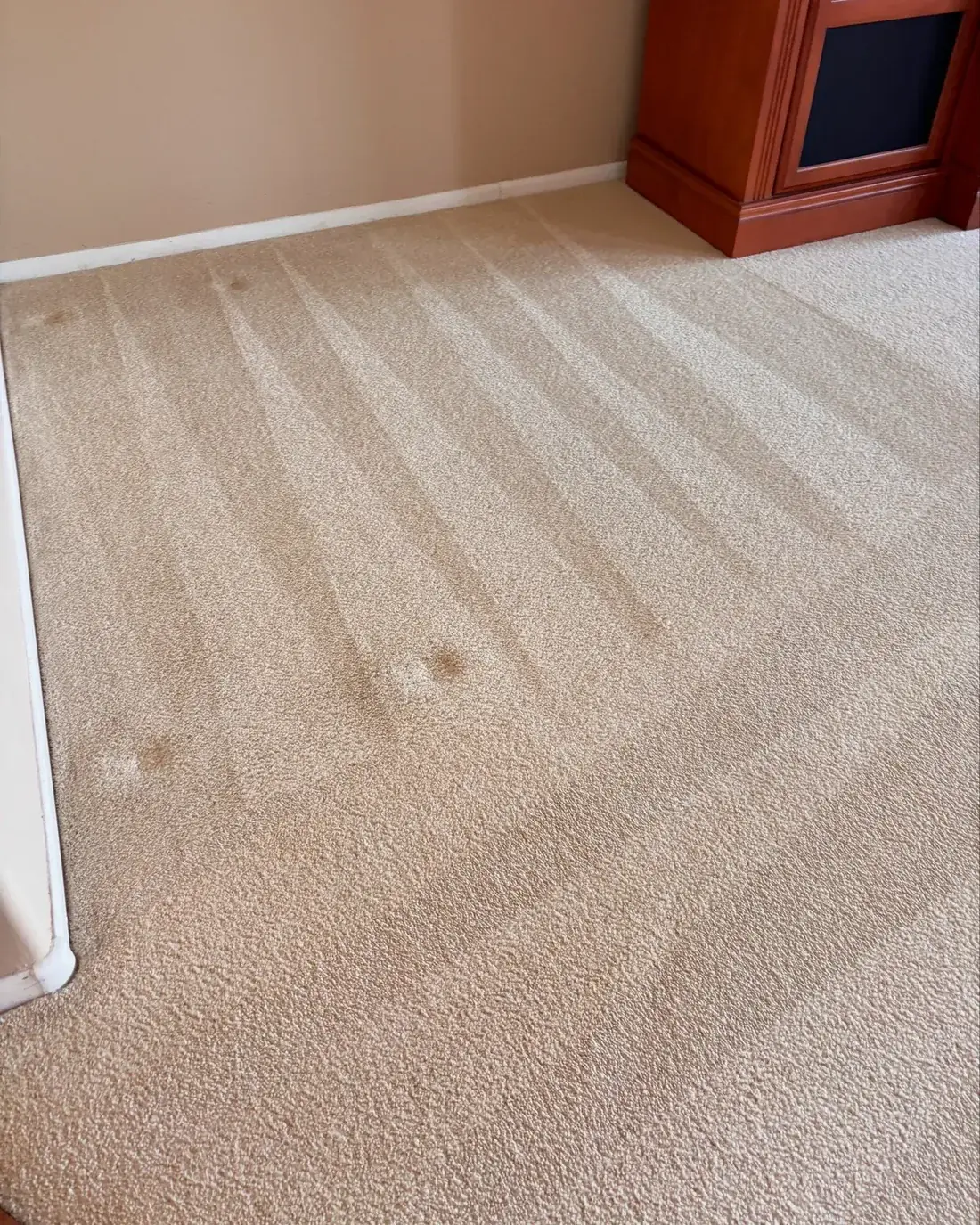
Walk down the pet care aisle of any store in the Valley and you will find a dozen products promising to eliminate pet odor. The confusing part is not whether they work at all, it is understanding what they are capable of and where the line is between a problem they can handle and one that needs a different approach.
What Store-Bought Products Are Actually Doing
Odor-masking products cover the smell with fragrance, sometimes with a mild antibacterial agent. They do not address the underlying contamination at all. Once the fragrance fades, whatever was producing the odor is still there.
Surface-level enzymatic products are a step up and contain the correct chemistry. The problem is dosage, contact time, and reach. A spray bottle applies a small amount to the visible surface of the stain. It is rarely enough volume to saturate contamination that has already traveled into padding, and consumer instructions call for a short dwell time before blotting, which often is not long enough.
That is why homeowners describe the same pattern: the product seems to work, the smell fades, and it returns days or weeks later, sometimes stronger, especially after a change in humidity.
What Enzyme Treatment Requires to Work
The enzymes are not the issue. Enzymatic cleaning is the correct chemistry for urine. The problem is almost always application.
- Volume and reach. Applied in the quantity needed to reach the depth of the contamination, including down into padding, not just the visible fiber.
- Dwell time. Enzymes need extended contact to fully break contamination down. Rushing it by blotting too soon leaves partially broken-down residue, which still produces odor.
- Identifying the full contamination area first. A black light inspection reveals the actual boundary of where urine has spread, which is almost always larger than the visible stain.
- Proper extraction afterward. The treated area gets extracted rather than blotted, so the broken-down residue comes out instead of drying back into the fiber.
When a Store-Bought Product Is Fine
A genuinely enzymatic spray, used immediately on a very fresh minor accident, applied generously with real dwell time, can resolve a minor issue. Where they consistently fall short is older accidents, repeated accidents in the same spot, larger volume accidents, and anything that has reached padding, a rug foundation, or subfloor.
Why This Matters Beyond the Smell
Over time, the acidity and salts in urine can affect carpet dye, causing discoloration separate from the odor problem. Contamination left in padding also creates a more hospitable environment for bacteria and, in humid conditions, mold growth.
The Real Cost Comparison
A bottle of enzymatic spray costs a fraction of professional treatment, which makes DIY look like the obvious choice. A single bottle rarely handles more than one or two spot treatments, and a homeowner dealing with a persistent odor often works through multiple bottles over several weeks before calling anyway. At that point the DIY spending has added up, the problem is not resolved, and the contamination has had more time to establish in the padding.
There is also the rental machine route, which charges by the day and sometimes requires a second or third rental. And the cost that does not show up on a receipt: professional treatment addresses the problem in one properly executed visit, where DIY troubleshooting stretches across weeks.