
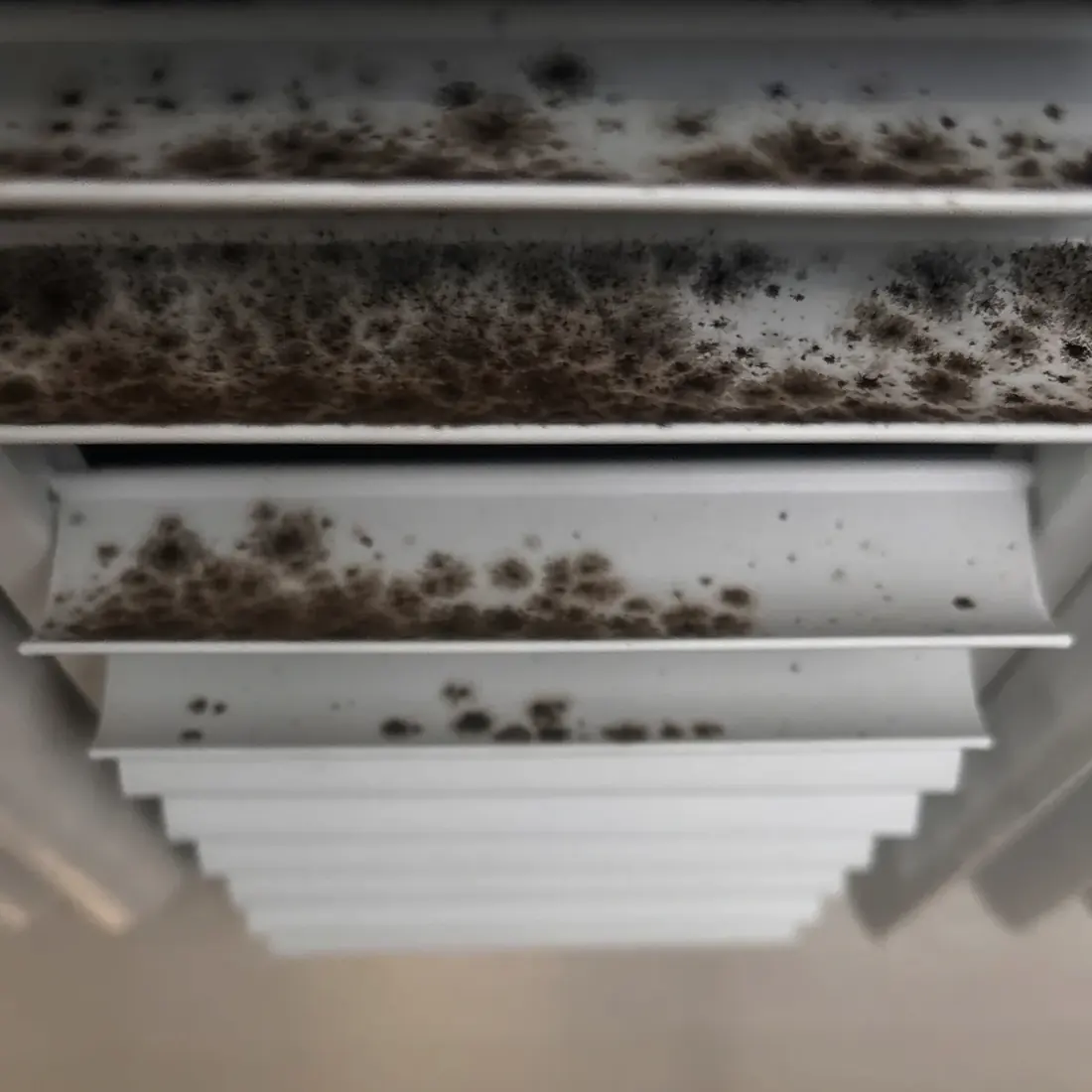
You wipe down every surface in the house after a dust storm rolls through, and three days later there is a fresh layer on the coffee table. The reason it happens is that dusting only addresses the dust you can see. Here is where the rest of it goes.
How the Dust Gets In
Door and window gaps. Even well sealed homes have some infiltration, and during a storm the pressure differential pushes air inward through every gap.
HVAC return air. Your system pulls air through the return, and depending on filter quality and how well the return is sealed, a portion of fine particulate passes through.
Attic and duct leakage. This one gets overlooked. Ductwork running through an attic is often not perfectly sealed at every joint. Arizona attics are dusty spaces, and any negative pressure in the duct system draws that attic air into the supply.
On you. Shoes, clothing, and pets carry it in every time someone comes through the door.
Why It Keeps Coming Back
Once fine dust is inside, it does not stay put. It settles onto horizontal surfaces, gets disturbed by foot traffic and air movement, becomes airborne again, and eventually a portion ends up circulating through your HVAC system.
That system runs hard through an Arizona August. Every cycle pulls household air through the return, past the filter, through the equipment, and back out through the supply ducts. Whatever settles inside the ductwork sits there, and some of it gets picked up and redistributed on the next cycle.
So the cycle is: storm brings dust in, dust settles, dust gets stirred up, some lands in the duct system, and the duct system slowly returns it to the living space over the following weeks.
What Actually Reduces It
Before we talk about duct cleaning, here is what does the most for the least money.
- Filter quality and change frequency. The single highest impact thing most homeowners control. During monsoon season, check monthly rather than quarterly. A loaded filter stops working and can restrict airflow enough to strain the system.
- Seal what you can. Weatherstripping and caulk around window frames reduce infiltration meaningfully and cost very little.
- Walk off mats and a shoes off habit. A large fraction of household dust arrives on footwear.
- Run the fan after a storm. Circulating air through a clean filter for a few hours captures a portion of what is suspended.
- Vacuum with a good filter. A vacuum that exhausts fine particulate back into the room makes the problem worse.
When Duct Cleaning Makes Sense
Duct cleaning is not something every home needs every year, and we would rather tell you that than sell you something you do not need. It is worth considering when there is visible debris at supply registers, after construction or a remodel, in a home you just moved into with unknown history, after pest or rodent activity in the ductwork, with persistent musty odor when the system runs, or in a home well past a decade old that has never had it done.
It is less likely to be the right answer if your main complaint is general household dust and your filter situation is not dialed in yet. Fix the filter first, because that is cheaper and addresses more of the problem.
What We Do and What We Do Not Claim
We clean ductwork using rod and brush tools with vacuum collection, working the supply and return runs and clearing debris out of the system.
What we will not do is tell you that duct cleaning solves allergies, eliminates all household dust, or lowers your power bill by a specific percentage. Those claims get made in this industry and they are not supportable. Duct cleaning removes accumulated debris from your duct system. That is a real and worthwhile result, and it is what we will describe to you. We will also tell you if we look at your system and think you do not need it.