
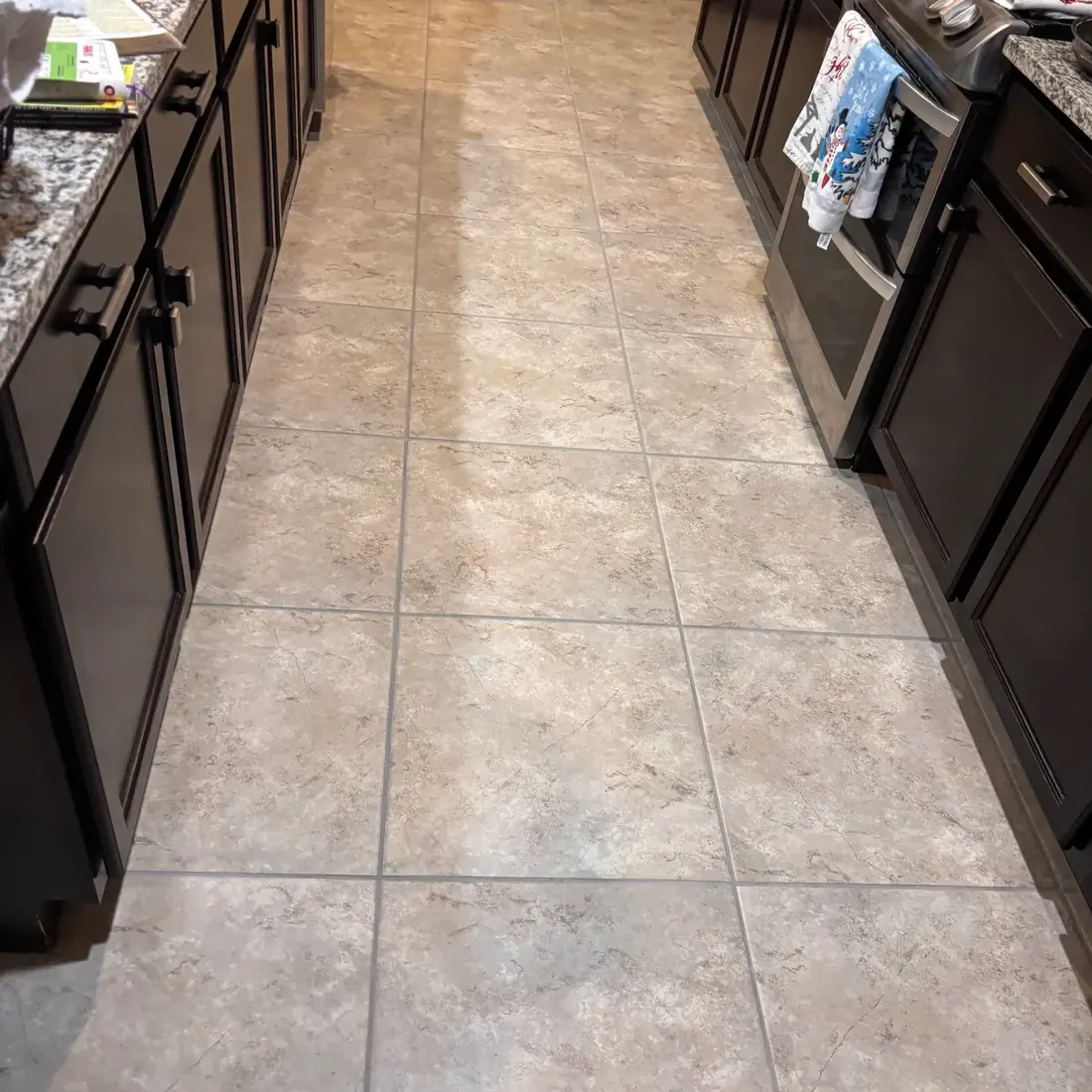
Mopping can only do so much. Grout is porous, which means dirt, grease, and hard water minerals eventually work their way beneath the surface into a layer no mop, sponge, or store-bought cleaner reaches. That is the gap professional tile and grout cleaning is built to close.
Beneath the Surface, Not Just Across It
A quick surface pass makes grout look better temporarily while leaving embedded grime untouched, which is exactly why grout lines darken again within weeks after some cleanings.
Our process is four steps: inspection and assessment, pre-treatment, deep cleaning with machine agitation driven into the grout line and extracted, and a final inspection together with you. Corners, edges, and anywhere the machine cannot reach get done by hand.
Every Hard Surface, Not Just Tile
Tile cleaning, grout cleaning, grout color sealing, natural stone cleaning for travertine, marble, limestone and slate, shower tile cleaning, and hard water buildup removal.
Homes rarely have just one type of hard surface. You might need embedded grease pulled out of kitchen tile, hard water removed from a shower, and travertine handled properly, all of which take different techniques.
Color Sealing Solves What Cleaning Cannot
Even with a thorough deep clean, some grout discoloration is permanent. We would rather say that than oversell the cleaning.
That is where grout color sealing comes in: a pigmented coating that restores consistent color, covers permanent discoloration, resists future staining, and makes routine cleaning easier, with over 40 colors to match your tile or change it entirely.
Stone Gets Treated as Stone
Travertine, marble, limestone, and slate are more porous and far more easily damaged by the wrong chemicals than ceramic or porcelain. Acid does not wear stone down over time, it etches it immediately and permanently. Treating natural stone with a specialized process, rather than the same one used on ceramic, protects a surface that is often one of the more expensive finishes in the home.
What Arizona Homes Are Up Against
Desert dust, hard water, and heavy foot traffic working into grout lines in kitchens, bathrooms, entryways, and living areas. Chandler runs around 16 to 17 grains per gallon, Scottsdale closer to 20. That is not generic "tile gets dirty" language, it is the specific condition that shapes how the work gets approached.
Honest About the Limits
Not every grout stain comes out, cracked grout needs repair before sealing will hold, and epoxy grout will not accept colorant at all. We will tell you which situation you are in during the inspection rather than after we have taken your money. Pricing is on the tile and grout page.