
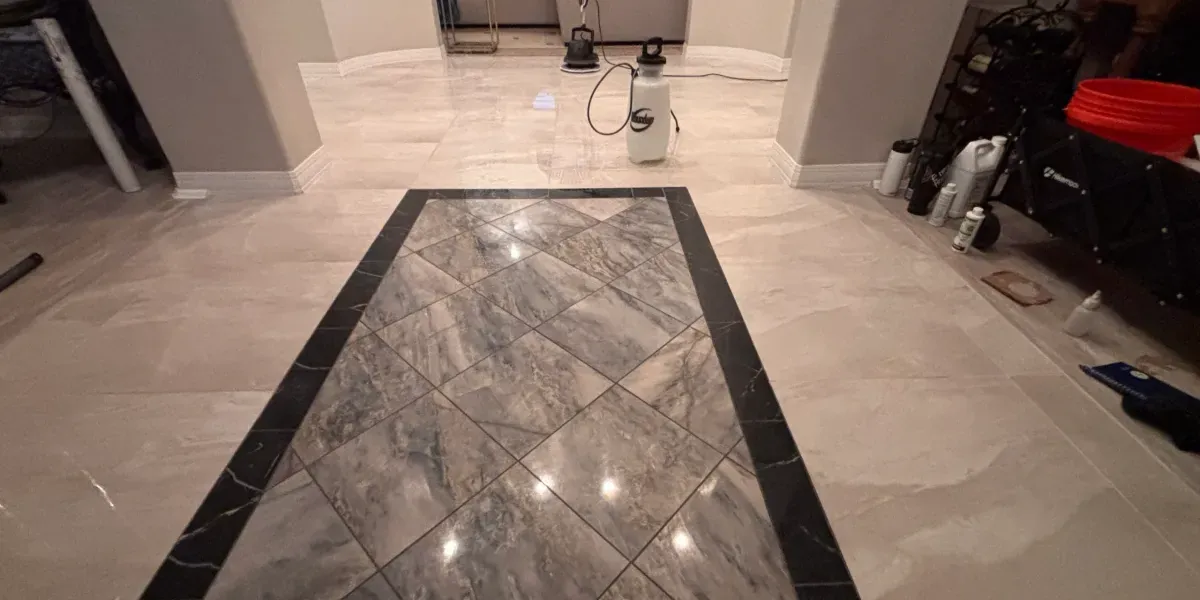
There is a specific kind of frustration that comes with owning natural stone floors in Arizona. You paid a premium for travertine or marble. A few years in, the entryway has gone dull, there are cloudy spots near the kitchen sink no amount of mopping touches, and the floor has a tired quality you can see but cannot name.
Nothing is wrong with your floor. Stone in this climate behaves differently than stone anywhere else, and almost nobody explains that at the point of sale.
Stone Is Not Tile, and Treating It Like Tile Is How It Gets Destroyed
This is the single most important thing to understand, and it is why we handle natural stone as a completely separate service from our tile and grout work.
Porcelain and ceramic are fired, vitrified, and essentially inert. You can hit them with aggressive alkaline or acidic cleaners and they shrug it off. Travertine, marble, and limestone are calcium carbonate. They react chemically with acid. Not wear down over time. React immediately and permanently.
Someone uses a standard bathroom cleaner on marble, or a vinegar solution they read about online. The acid dissolves a microscopically thin layer of stone. The result is etching, and it looks like a dull, slightly rough patch where the polish used to be. It is not a stain sitting on top of the stone. It is missing stone.
Etching cannot be cleaned out. It has to be honed and refinished, which is restoration, not cleaning. Slate behaves differently again: it does not react to acid the way calcium-based stones do, but it flakes and spalls if treated aggressively, and takes sealer completely differently than travertine.
That is why we identify the stone type during inspection before selecting a single product.
What Arizona Specifically Does to Stone
Hard water is the big one. Phoenix-area water carries a heavy mineral load, and stone is more porous than tile, so it absorbs those minerals rather than letting them sit on the surface. Over years, calcium and magnesium build up inside the pore structure. That is the cloudy, flat look on travertine near sinks and entries. It is not dirt.
Desert dust is the second. It works into stone texture and grout lines. On honed or tumbled travertine, which has an inherently open surface, dust settles into every pore. You mop, it looks right while wet, and goes back to gray when it dries.
Sealer breakdown is the third and the one nobody thinks about. Every penetrating sealer has a service life. Traffic abrades it, cleaning products strip it, UV through big Arizona windows degrades it. Most Valley homes we walk into have stone sealed once, at installation, by a builder using the least expensive product that met spec.
The Water Test
Put a few drops of water on the stone in a high-traffic area. If it beads up and sits there, your sealer is intact. If it spreads out and darkens the stone, the seal is worn through. If it soaks in and leaves a dark spot that takes minutes to fade, you are well past due. Run the same test in a low-traffic corner and compare.
Most homeowners reseal every one to two years depending on the sealer and traffic.
Choosing a Sealer, Honestly
Cleaning only. A deep clean that pulls embedded dirt and mineral out and restores the natural appearance. If your existing seal is still beading water, this is genuinely all you need, and we will tell you that.
Clean plus clear sealer. Protection without meaningfully changing how the stone looks. The right call for most homes.
Clean plus color enhancing sealer. Deepens and enriches the natural color. A real visual change, not a subtle one. On travertine and slate it can be dramatic.
The honest guidance: color enhancing is an aesthetic decision, not a protection decision. Both protect. So pick the look you want, not the one that sounds more protective.
The Grout Question
You can have the stone itself looking beautiful and the floor still reads as dirty, because the grout lines are what your eye catches. Grout color sealing applies a durable color coating to the grout lines specifically, with over 40 color options. It can be added to any package, and you are never required to buy a higher cleaning tier just to get it.
What You Can and Cannot Fix
Usually fixable: embedded dirt, hard water and mineral buildup, dullness from worn sealer, dark grout, general traffic wear.
Sometimes improved: deeply set stains, particularly oil-based ones on porous travertine or limestone.
Not a cleaning problem: etching, chips, cracks, structural damage. Etching gets misdiagnosed as a stain constantly, and homeowners spend money cleaning something that is not dirty.
Care Between Services
- Use a pH-neutral cleaner made for natural stone. Not vinegar, not bathroom cleaner, not all-purpose spray.
- Wipe spills immediately. Wine, coffee, citrus, and oil cause the real problems.
- Felt pads under furniture. Marble and limestone scratch more easily than people expect.
- Mats at every entry, since grit acts like sandpaper on a polished surface.
- Squeegee stone showers after use. Hard water contact is the biggest driver of buildup in wet areas.